
Background
Bioactive Fundamentals
20 min| Beginner

Arid vs. Tropical Bioactive Enclosures

When most keepers imagine a bioactive enclosure, they picture a dense rainforest vivarium dripping with humidity. But bioactive systems are not limited to tropical environments. With the right adjustments, arid ecosystems can be just as stable and self-sustaining. This guide explains how to adapt core bioactive principles for both climate types.
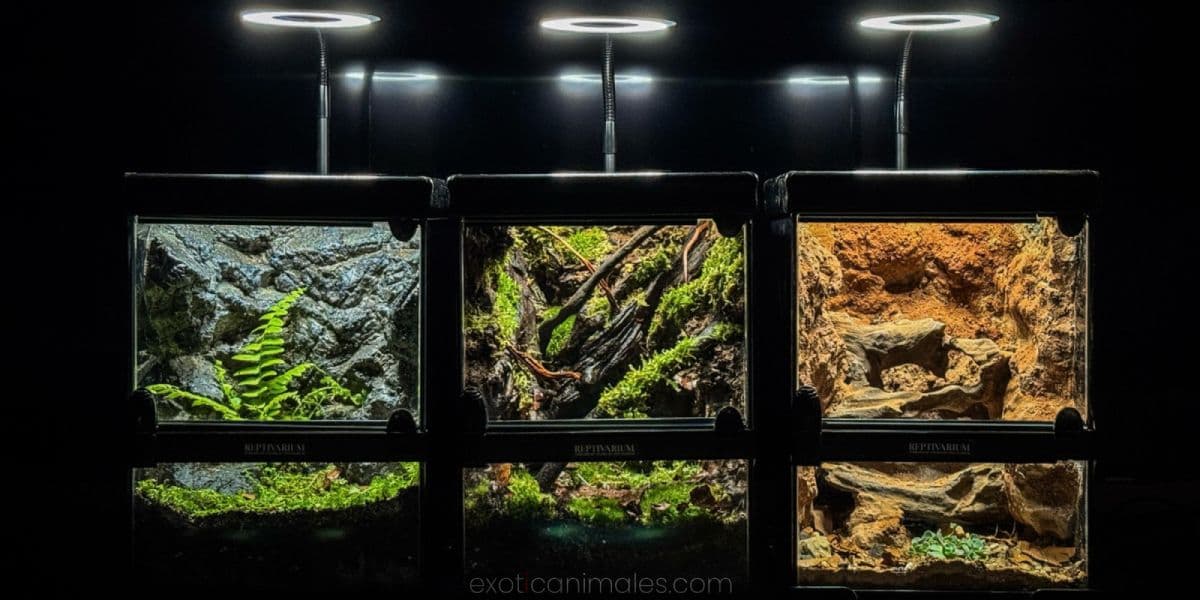
Arid vs. Tropical Bioactive Enclosures environment
Live Ecosystem Preview

Bioactive Is Not Just Tropical

For many reptile keepers, the term “bioactive” immediately brings to mind a lush, jungle-style enclosure — heavy foliage, high humidity, and dark, moisture-rich soil. While tropical vivariums are visually iconic, they represent only one end of the environmental spectrum.

Bioactive systems are built on ecological balance, not humidity alone. Whether designing a rainforest enclosure or a desert biome, the same foundational principles apply: layered substrate, microfauna populations, living plants (where appropriate), and controlled moisture gradients.

The key difference between arid and tropical bioactive setups lies not in the concept, but in how the components are proportioned and managed. Animals from humid climates require sustained moisture and higher atmospheric humidity, while desert and semi-arid species demand airflow, drainage control, and careful moisture localization.

Understanding how to adjust each layer of the system allows you to confidently create a thriving bioactive enclosure for nearly any reptile species.

Climate Determines Strategy

The primary distinction between arid and tropical bioactive environments is moisture management. Tropical ecosystems rely on evaporation, water retention, and sustained humidity. Arid systems, by contrast, focus on preventing excess moisture buildup while still supporting microfauna survival.

Before constructing your enclosure, identify your reptile’s natural habitat. Does it originate from rainforest, savannah, scrubland, or desert? Each environment influences how thick your drainage layer should be, how moisture is introduced, and how your base substrate is formulated.

Rather than building two completely different systems, think of arid and tropical setups as variations of the same ecological blueprint — with materials and ratios adjusted to match environmental demands.

Drainage Layer Differences

In tropical bioactive enclosures, the drainage layer plays a major role in humidity stability. Because these environments require regular watering and sustained moisture, excess water must have somewhere to collect without flooding plant roots or saturating the base substrate. A taller drainage layer allows water to pool safely beneath the soil, gradually evaporating upward to contribute to atmospheric humidity. This evaporation process provides flexibility during routine misting or watering and reduces the risk of root rot. In arid enclosures, however, a drainage layer is often unnecessary. Since significantly less water is introduced into the system, standing water can unintentionally elevate humidity levels beyond what desert species tolerate. Some keepers omit the drainage layer entirely in arid builds, especially for species that burrow deeply.

Leaf Litter & Moss Adjustments

Leaf litter remains essential in both environments. A surface layer of dried leaves provides shelter and nutrition for the clean-up crew while helping maintain microclimate pockets within the substrate. The difference lies in sphagnum moss usage. Tropical enclosures benefit from generous moss application, as sphagnum retains water and slowly releases moisture into the air and soil. This helps maintain consistent humidity between misting sessions. In arid setups, moss should be used sparingly and kept only slightly damp. Instead of saturating large areas, create localized moisture pockets where isopods can self-regulate hydration. This preserves microfauna survival without compromising overall dryness.

Base Substrate Philosophy

The base substrate layer is where arid and tropical systems diverge most dramatically. Unlike drainage or moss adjustments, which vary in volume, the actual composition of the base layer changes significantly. This layer determines burrow stability, plant viability, moisture retention, and microbial activity. Tropical substrates are engineered to retain humidity while remaining aerated, whereas arid substrates prioritize structure and drainage to prevent excessive dampness.

Moisture Control & Maintenance

Tropical systems depend on routine misting, strategic watering, and active humidity monitoring. Because pooled water in the drainage layer contributes to evaporation, these enclosures tolerate more frequent hydration. Arid enclosures require more restraint. Water should be introduced carefully, typically in corners or beneath specific decor elements to avoid raising ambient humidity too high. If a drainage layer is present in an arid enclosure and begins collecting excess water, it should be drained to prevent humidity spikes. The goal in both systems is balance — enough moisture to sustain plants and microfauna, but not so much that it compromises the reptile’s respiratory health.

Choosing the Right Environment for Your Species
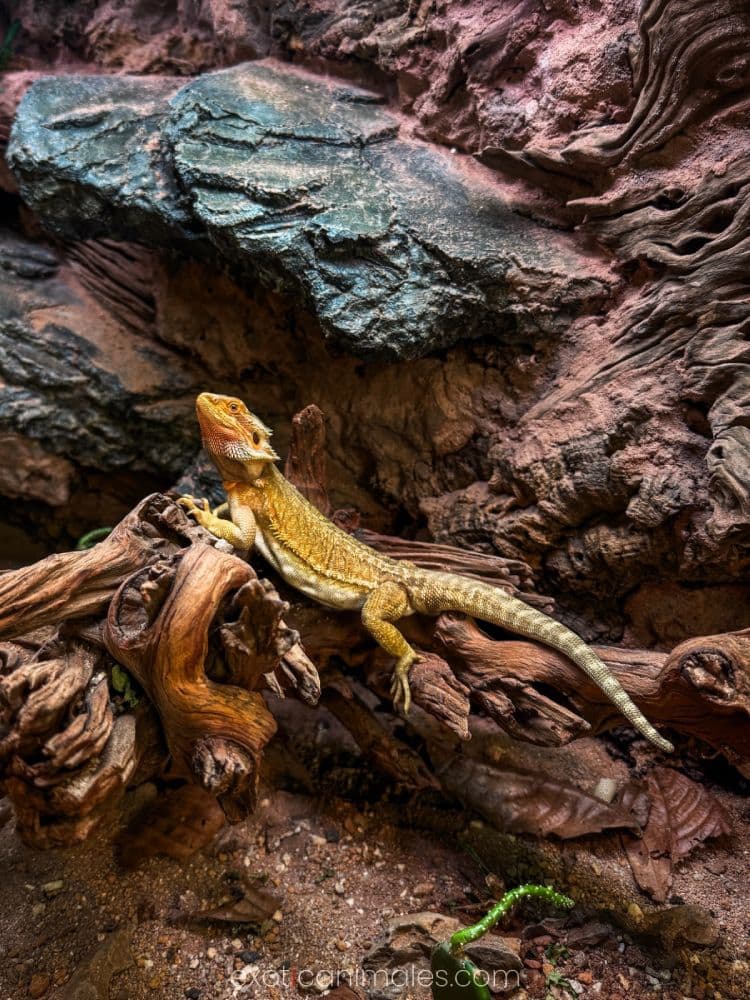
Selecting between an arid or tropical bioactive system is not about aesthetics — it is about replicating the ecological pressures your reptile evolved within. Tropical species thrive in stable, humid environments where moisture gradients are consistent and plant density is higher. These systems often appear lush and layered, with active microbial life and rapid plant growth. Arid species, by contrast, require stronger airflow, controlled hydration zones, and substrates engineered to prevent compaction and waterlogging. While these setups may appear more minimal, they are no less complex beneath the surface. By understanding how substrate composition, drainage depth, moss quantity, and watering techniques shift between these climates, you can design a bioactive enclosure that supports long-term stability — regardless of biome.
Choosing the Right Environment for Your Species

Tropical Base Layer Composition Guide

  • A Lot: Organic topsoil — forms the primary moisture-retentive structure.
  • A Lot: Coco fiber or coco coir — increases water retention and aeration.
  • Some: Play sand — improves drainage and structural strength.
  • Some: Orchid bark or reptile-safe wood chips — enhance aeration and root stability.
  • Some: Peat moss — assists with moisture retention in high-humidity builds.
  • A Little: Charcoal — filters impurities and supports beneficial bacteria.
  • A Little: Supplemental sphagnum moss mixed into substrate for added moisture buffering.

Arid Base Layer Composition Guide

  • A Lot: Play sand — increases drainage and mimics desert soil texture.
  • A Lot: Organic topsoil — provides structure and supports microbial life.
  • Some: Coco coir or coco fiber — added sparingly to prevent over-retention of moisture.
  • A Little: Clay — strengthens burrows and replicates compact desert terrain.
  • A Little: Reptile-safe wood chips — add organic material without trapping excessive moisture.
  • A Little: Charcoal — improves long-term substrate stability.
  • Minimal: Sphagnum moss blended lightly for localized humidity control.
Back to Guides