
The Ultimate Ball Python Bioactive Manual
The 'tub and paper towel' era is over. To truly see a Ball Python thrive, you must provide a landscape that encourages their natural behaviors—burrowing, climbing, and cryptic basking. This guide teaches you how to build a fortress of nature that looks as good as it functions.
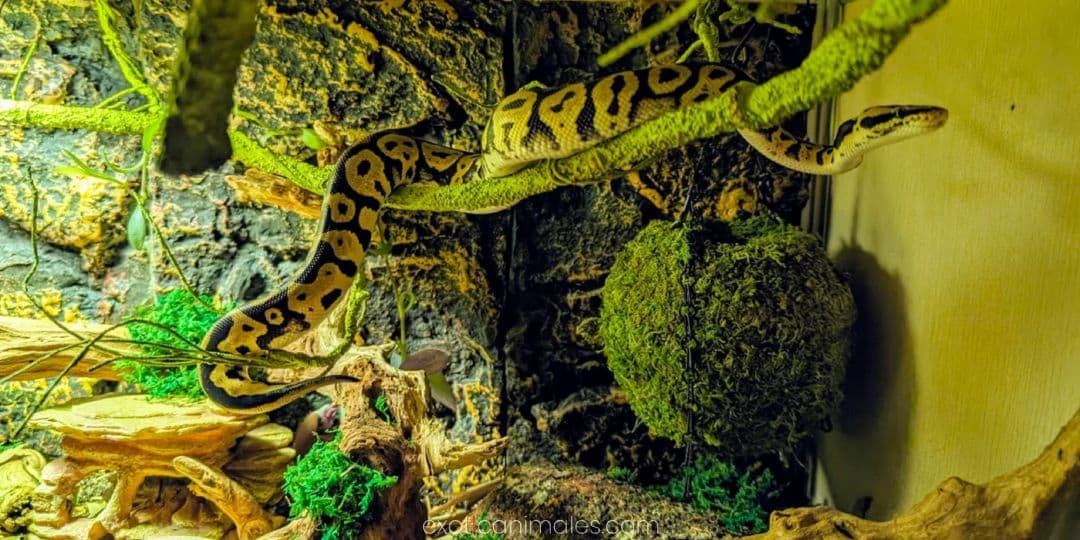
The Bio-Mechanical Foundation: Substrate Architecture
Most keepers fail because their soil collapses. For a heavy-bodied snake, you need a substrate with high structural integrity. We recommend a 5:3:2 mix of organic topsoil, coconut husk, and play sand. This allows the snake to create shallow depressions (micro-burrows) without the tunnels collapsing.
Furthermore, adding Lump Charcoal is essential. Charcoal acts as a 'chemical sponge,' pulling impurities from the soil and providing a massive surface area for beneficial bacteria to colonize, preventing the soil from souring over time.
The Thermal Gradient in a Living System
In a bioactive tank, heat does more than warm your snake; it drives the metabolism of your soil. Using an Overhead Deep Heat Projector (DHP) is superior to under-tank heating. It mimics the sun by warming the top layer of substrate and the plants, which then slowly release 'IR-B' heat back into the air. This create a natural convection current that keeps your Cleanup Crew active even at night.
The Hydration Strategy
Bolding & Hardscaping
Managing the 'Bio-Load'
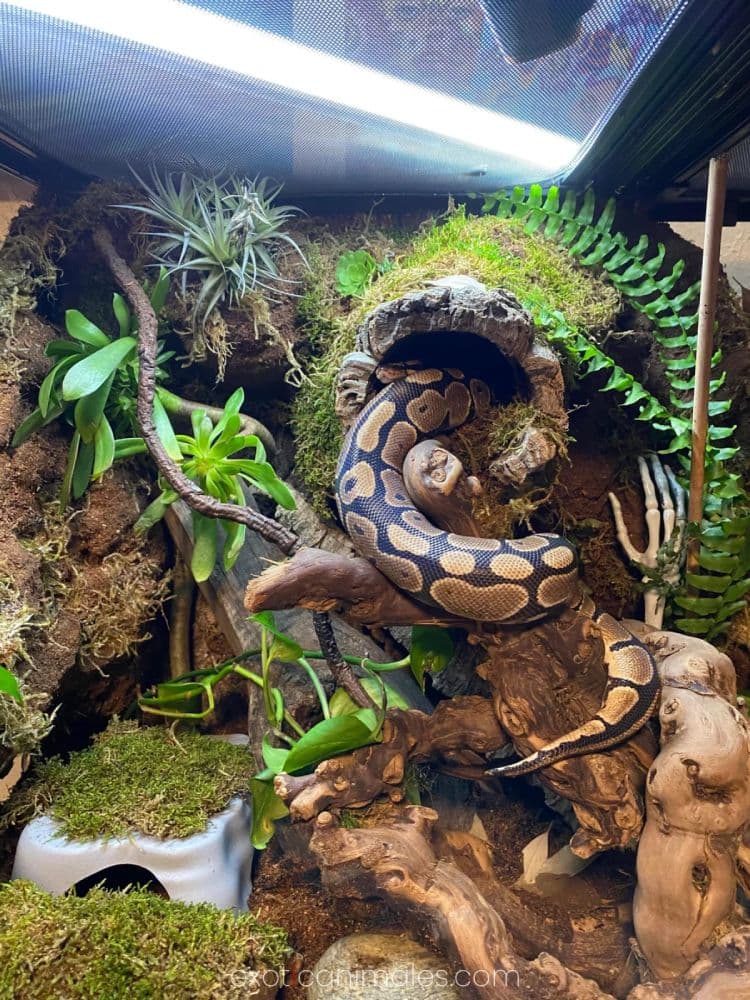
The Cleanup Crew 'Heavy Lifters'
- Porcellio scaber (Rough Isopods): Known for their voracious appetite for snake urates.
- Giant Canyon Isopods: Deep burrowers that aerate the root zones of your plants.
- Pink Springtails: Superior mold controllers in high-nitrate environments.
- Arid-mix Leaf Litter: A thick 2-inch layer of Oak and Maple leaves to provide a carbon source.
Plant Selection for 'Living Bulldozers'
- Sansevieria laurentii: Virtually indestructible and provides vertical cover.
- Pothos (Epipremnum aureum): Fast-growing vines that quickly replace any leaves crushed by the snake.
- Zanzibar Gem (ZZ Plant): Thrives in the lower-light conditions of a python's shady corners.
- Bromeliad Neoregelia: Adds a splash of color and holds small reservoirs of water.