
Bioactive Terrarium Plants and Lighting
Plants are more than decoration in a bioactive enclosure — they are active biological workers. From nutrient absorption to humidity regulation, plant selection and lighting design directly influence the stability of your ecosystem. This guide breaks down how to choose safe plants and build a lighting system that supports both reptile and plant health.
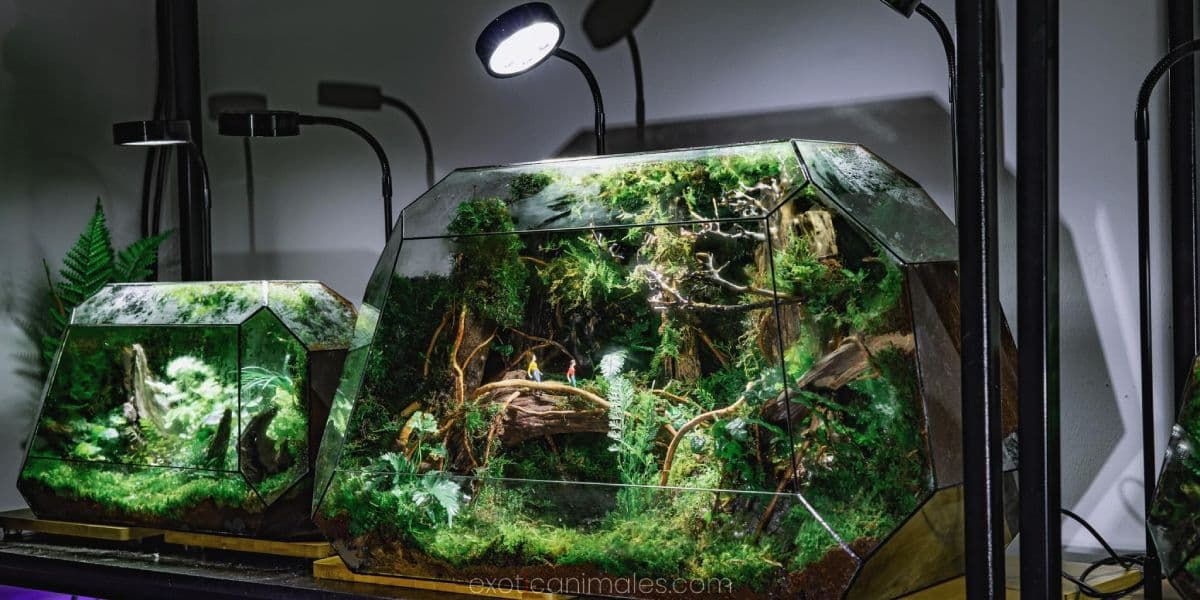
Why Live Plants Are Essential in Bioactive Systems
Live plants form one of the foundational pillars of a bioactive enclosure. Beyond aesthetics, plants perform vital biological functions that stabilize and enhance the ecosystem.
Through photosynthesis, plants absorb carbon dioxide and various waste byproducts from the soil while releasing oxygen back into the enclosure. This continuous gas exchange contributes to improved air quality and healthier soil chemistry.
Plant root systems reinforce substrate structure, making burrows more stable and resistant to collapse. This is especially important for reptiles that dig or create shallow depressions in their environment.
Roots also aerate the soil, increasing oxygen availability for beneficial bacteria and the clean-up crew. Without proper aeration, substrate can compact and become anaerobic — a common cause of bioactive failure.
Additionally, plants regulate humidity through transpiration — a natural process where water vapor is released from leaf surfaces into the surrounding air. This helps buffer humidity swings and maintain environmental consistency.
Even in arid enclosures, live plants can be incorporated successfully. Selecting drought-tolerant species ensures that humidity levels remain stable while still providing structural and biological benefits.
Additional Benefits of Strategic Planting
In tropical systems, broad-leafed plants can collect water droplets from misting systems, creating natural drinking opportunities for reptiles. This mimics dew formation and encourages instinctive hydration behaviors.
Dense foliage provides visual security and additional hiding opportunities, reducing stress and encouraging natural exploration. Enrichment increases when reptiles can interact with a complex, layered environment.
Some plant species are even edible and may serve as supplemental forage for herbivorous reptiles — though plant safety must always be verified before introduction.
Ultimately, plant selection should enhance both ecological function and behavioral enrichment without compromising safety.
How to Choose the Right Plants
Safety & Structural Considerations
Bearded Dragon Plant Examples (Arid Setup)
Ball Python Plant Examples (Humid Setup)
Designing a Balanced Lighting System
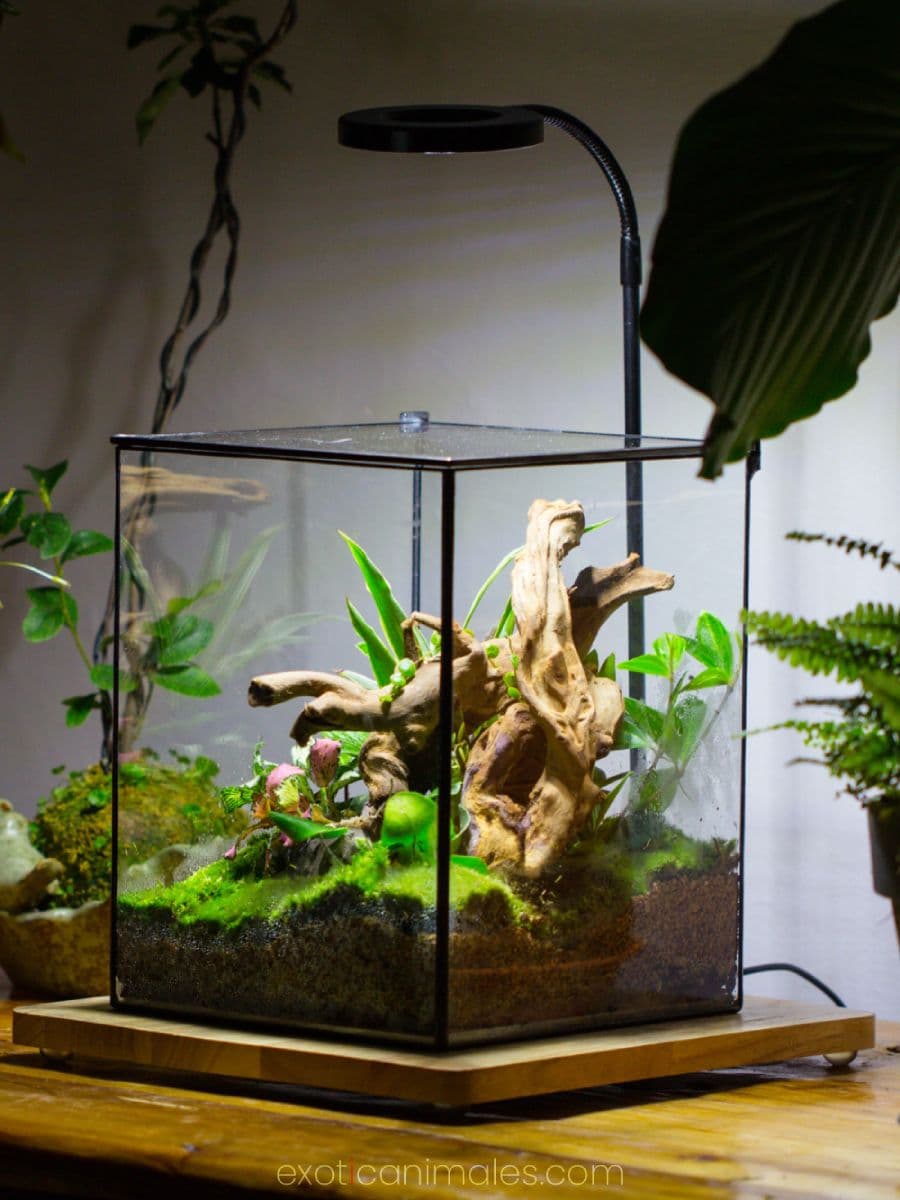
Understanding Natural Light Types
- Infrared (Heat): Supports thermoregulation and metabolic function.
- Visible Light: Drives plant photosynthesis and maintains circadian rhythm.
- Ultraviolet (UVB & UVA): Essential for reptile vitamin D3 synthesis and behavioral health.
- Full-Spectrum Output: Critical for optimal plant growth and color vibrancy.
- Light Intensity & Spread: Must match enclosure size and plant light requirements.
Recommended Lighting Setup
- PAR38 Halogen Bulb: Provides infrared heat and supplemental visible light.
- Strip-Style T5 or T8 UVB Bulb: Delivers consistent ultraviolet exposure across the enclosure.
- Full-Spectrum LED Plant Grow Light: Supplies the visible spectrum plants require for photosynthesis.
- Avoid Coil UVB Bulbs: Concentrated UVB output can damage plants and create uneven exposure.
- Match Light Strength to Plant Category: Low-light, partial-shade, or full-sun species.