
Basic Bioactive Enclosure Setup Overview
Building a bioactive enclosure can feel overwhelming after learning about drainage layers, substrates, microfauna, humidity control, and plant selection. This guide brings everything together into a clear, chronological timeline so you can confidently build, cycle, and introduce your reptile into a stable, thriving ecosystem.
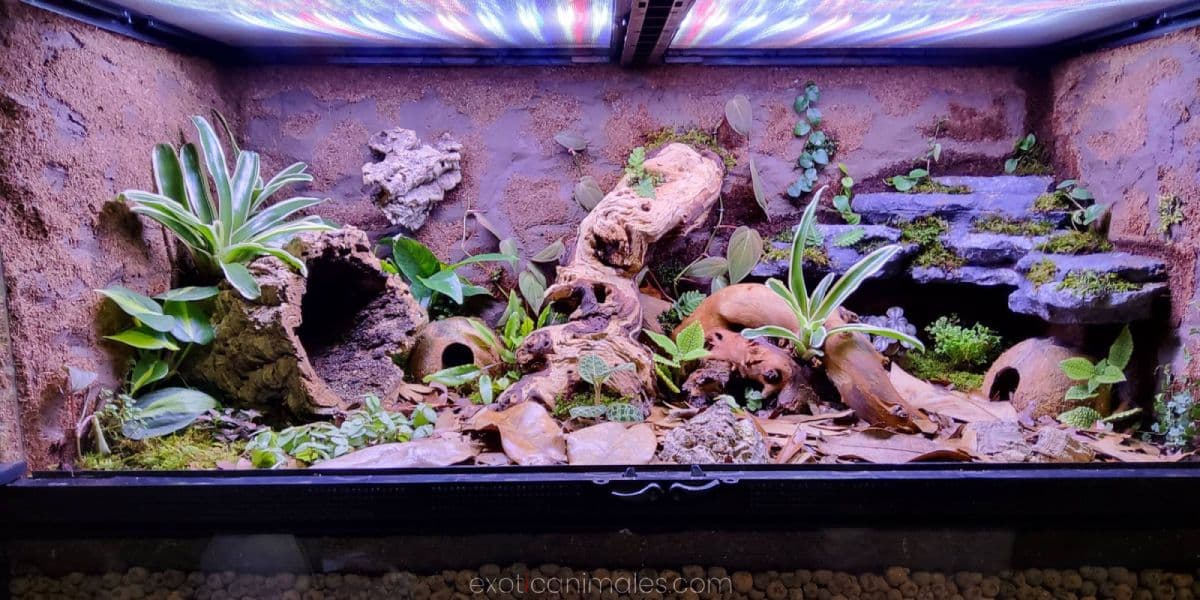
Why Following a Bioactive Timeline Matters
A bioactive enclosure is not simply a decorated terrarium — it is a functioning ecosystem. Like any ecosystem, it requires time to stabilize.
Rushing the process can lead to mold blooms, unstable humidity, uprooted plants, or microfauna population crashes. By following a structured timeline, you allow beneficial bacteria, springtails, isopods, and plant roots to establish before introducing your reptile.
This step-by-step guide ensures your enclosure cycles properly, maintains correct humidity levels, and supports long-term reptile health.
What to Expect After Introducing Your Reptile
Once your reptile is added, the bioactive enclosure becomes a fully functioning ecosystem. Waste will be processed naturally by isopods and springtails. Plants will utilize nutrients recycled from decomposed matter.
Minor fluctuations in humidity or microfauna populations are normal during the first month. Stability improves as biological systems mature.
Appropriately established bioactive enclosures have demonstrated improvements in natural behavior, enrichment, humidity regulation, and overall reptile well-being.
Congratulations — you have successfully built and cycled a living bioactive ecosystem.
Step 1: Prepare & Seal the Enclosure
- Thoroughly clean the enclosure and remove dust, debris, or chemical residues.
- Allow all surfaces to dry completely before proceeding.
- Design and construct your custom background if desired.
- Use expanding spray foam for structure if building a 3D background.
- Seal all foam with 100% silicone to waterproof and prevent moisture damage.
- Ensure any wood or porous material exposed to humidity is properly sealed.
- Allow sealants to fully cure before adding substrate layers.
Step 2: Install Substrate Layers Correctly
- Add a drainage layer (expanded clay balls or lava rock) if building a humid enclosure.
- Install a mesh or substrate barrier to prevent soil mixing into the drainage layer.
- Add your bioactive base substrate mix (topsoil, organic compost, sand, or reptile-safe blends).
- Moisten substrate slightly to activate microbial life.
- Incorporate sphagnum moss for moisture retention in select areas.
- Top with a generous layer of leaf litter to support isopods and mimic natural forest floors.
Step 3: Add Hardscape & Plant Strategically
- Position branches, cork bark, rocks, and climbing structures before planting.
- Ensure heavy decor is placed securely on the enclosure base to prevent collapse.
- Plant taller plants toward the back for depth and light optimization.
- Place shorter or ground-cover plants toward the front.
- Gently firm substrate around plant roots to eliminate air pockets.
- Mist lightly to help plants settle into their new environment.
Step 4: Hydrate & Stabilize the Environment
- Add substantial water to fully hydrate substrate layers.
- Allow excess water to settle into the drainage layer (if present).
- Test humidity levels using a reliable digital hygrometer.
- Monitor temperature gradients to ensure proper reptile parameters.
- Adjust ventilation if humidity is excessively high or low.
- Add additional substrate or water if levels are not holding properly.
Step 5: Introduce Springtails
- Add the entire springtail culture directly onto the substrate surface.
- Pour charcoal cultures evenly across multiple moist areas.
- Do not panic if they disappear — springtails naturally burrow into the soil.
- Ensure moisture remains stable to support rapid reproduction.
- Expect minor mold blooms initially — springtails will help control them.
Step 6: Wait 2–3 Weeks & Monitor Closely
- Allow the enclosure to cycle without a reptile present.
- Monitor humidity stability daily.
- Observe plant health and root establishment.
- Watch for mold outbreaks and ensure they are decreasing over time.
- Confirm substrate remains aerated and not waterlogged.
- Make gradual adjustments rather than drastic changes.
Why This Waiting Period Is Critical
- Springtails must multiply to manage mold and organic waste effectively.
- Beneficial bacteria establish within moist substrate layers.
- Plant roots anchor securely, preventing uprooting by reptiles.
- Humidity levels stabilize into predictable patterns.
- Microbial nutrient cycling begins to function properly.
Step 7: Introduce Isopods
- Add isopods into moist, leaf-litter-rich areas.
- Provide cork bark or moss hides for moisture retention.
- Lightly feed with vegetable scraps if needed during establishment.
- Allow their population to grow before introducing the reptile.
- Ensure they are actively moving and foraging within the substrate.
Final Step: Add Your Reptile
- Confirm temperature and humidity parameters are stable.
- Ensure there is no excessive mold bloom.
- Verify plants are firmly rooted and decor is secure.
- Observe microfauna activity within the soil.
- Introduce your reptile and monitor behavior carefully.
- Continue routine monitoring during the first few weeks.