
Which Isopods Are Best For Bioactive Enclosures
Isopods are one of the most important biological components in a bioactive enclosure. They break down waste, recycle nutrients, aerate the soil, and support plant health. But not all isopods are created equal. Some thrive in arid environments, others demand tropical humidity. Some reproduce explosively, while others establish slowly. Choosing the right species requires understanding how their biology aligns with your reptile’s environment and waste production. This guide walks you through that decision in depth.
Why Isopod Selection Matters More Than Most Keepers Realize
In a functioning bioactive vivarium, isopods serve as primary detritivores. They consume reptile feces, urates, shed skin, uneaten food, and decaying plant matter before these materials can fuel harmful bacterial or fungal growth.
As they burrow and forage, isopods aerate the substrate, preventing compaction and improving root oxygenation. Their waste becomes bioavailable nutrients that support microbial colonies and plant growth. This constant recycling process is what transforms a decorative enclosure into a self-sustaining ecosystem.
However, selecting an incompatible isopod species can lead to population crashes, inadequate waste breakdown, predation imbalance, or even minor injuries in rare cases involving highly protein-driven species. Choosing correctly ensures long-term enclosure stability.
The Three Core Factors That Determine the Right Species
When choosing isopods for a bioactive enclosure, every decision should revolve around three critical variables: environmental compatibility, reproductive capacity, and reptile compatibility.
Environmental compatibility determines survival. Reproductive capacity determines sustainability. Reptile compatibility determines safety and long-term balance.
Ignoring even one of these variables can compromise the effectiveness of your clean-up crew.
Understanding the Environmental Spectrum: Arid to Tropical
Isopods originate from diverse climates across the globe. Their native habitats determine their tolerance to humidity, airflow, and substrate moisture.
Arid Bioactive Enclosures: These setups typically rely on hydration pockets beneath cork bark or sphagnum moss while maintaining relatively dry upper substrate layers. Species must tolerate surface dryness without desiccating.
Temperate Enclosures: Moderate humidity with ventilation and occasional drying cycles. Many adaptable species perform well in these systems.
Tropical Vivariums: High humidity, dense plant growth, and consistently moist substrate. Tropical specialists thrive here but may struggle in drier conditions.
Matching your isopod species to your reptile’s environmental parameters is the most fundamental step in successful bioactive design.
Reproductive Speed & Waste Processing Capacity
Not all reptiles produce waste at the same rate. High-metabolism species such as monitor lizards generate frequent waste deposits and require prolific isopods capable of rapid population expansion.
Conversely, species like ball pythons produce waste infrequently but in large quantities. In these cases, isopods must have both sufficient appetite and colony density to process occasional heavy loads.
Slow-breeding designer isopods may be visually appealing but can struggle in high-demand systems. For enclosures with frequent feeding and high organic turnover, reproduction speed is critical.
Protein-Driven Behavior & Compatibility Considerations
Isopods vary in dietary preference. Some species, particularly within the Porcellio genus, display strong protein-seeking behavior. In high-waste enclosures, this can be beneficial. However, in vegetarian reptile systems, these species may struggle to find sufficient protein.
Extremely protein-driven species such as Porcellio laevis (Dairy Cow) have occasionally been reported nibbling delicate reptiles under starvation conditions. While uncommon, this possibility makes species selection important when housing fragile or small reptiles.
On the other end of the spectrum, brightly colored or slow-moving isopods may be heavily preyed upon by insectivorous reptiles, reducing colony sustainability.
The Closest Thing to a Universal Recommendation
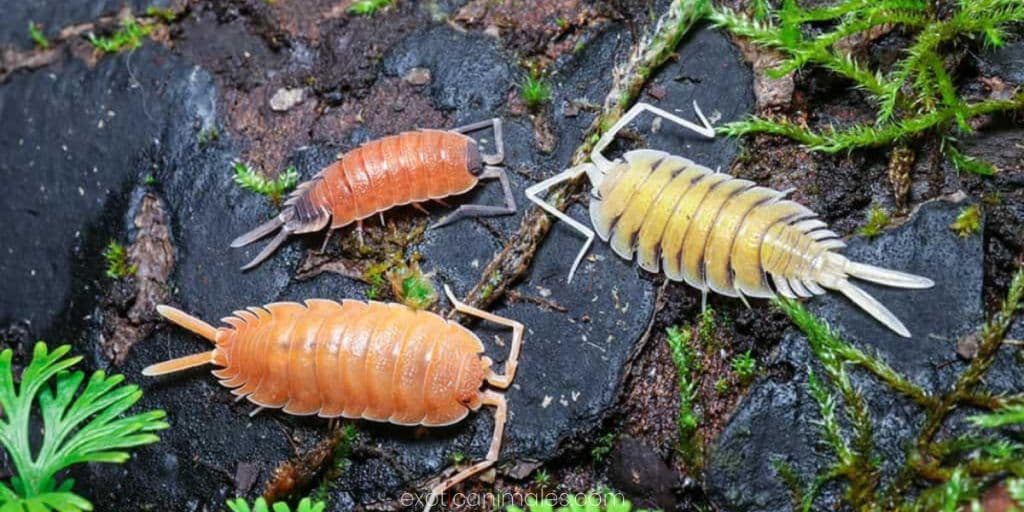
There is no true “universal” isopod that thrives in every environment with every reptile. However, Porcellionides pruinosus — commonly known as Powder Blue or Powder Orange isopods — come remarkably close.
They are highly adaptable, reproduce quickly, tolerate moderate humidity variation, consume a broad range of organic waste, and are fast enough to evade heavy predation. Their balanced feeding behavior makes them suitable for most temperate and semi-arid bioactive enclosures.
Unless your setup sits at the extreme ends of the arid or tropical spectrum, powder isopods are one of the safest and most reliable options available.
Stacking Species: The Sidekick Strategy
Many experienced bioactive keepers combine species to maximize ecological efficiency. One common strategy involves pairing a visible, surface-active species with a burrowing species such as Trichorhina tomentosa (Dwarf White).
Dwarf Whites reproduce via parthenogenesis and spend most of their lives within the substrate. They rarely compete directly with larger surface isopods and serve as a hidden backup population.
This layered approach increases resilience and reduces the risk of total clean-up crew collapse.
When to Avoid Certain Species
When to Prioritize Prolific Species
Genus & Species Breakdown for Bioactive Enclosures
- Porcellio – Fast, protein-driven, highly prolific; ideal for high-waste reptiles.
- Porcellionides pruinosus – Extremely adaptable and fast reproducing; excellent all-around choice.
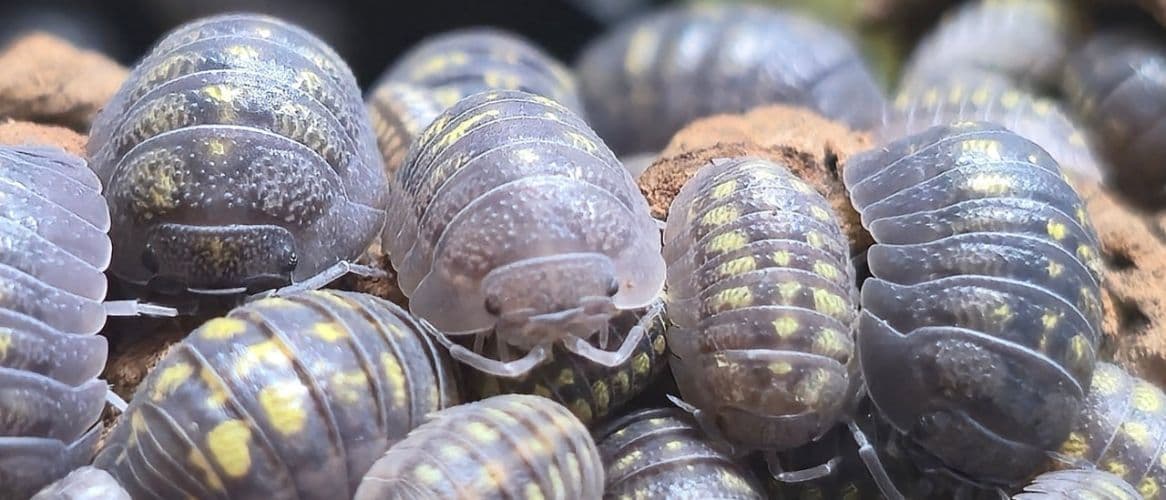
- Armadillidium – Moderate reproduction; capable of rolling into a defensive ball; suitable for temperate setups.
- Cubaris – Slower breeding, often designer morphs; require stable tropical humidity.
- Trichorhina tomentosa (Dwarf White) – Small, burrowing, parthenogenetic; ideal for tropical vivariums and dart frogs.
Species Recommendations by Reptile Type
- Bearded Dragon – Porcellio scaber (Orange Koi, Spanish Orange) for arid tolerance and strong reproduction.
- Leopard Gecko – Porcellionides pruinosus (Powder Blue/Orange) for flexibility and speed.
- Crested Gecko – Powder Isopods combined with Dwarf Whites for tropical balance.
- Ball Python – Powder Isopods for environmental adaptability and strong appetite.
- Corn Snake – Armadillidium maculatum (Zebra) for temperate tolerance.
- Monitor Lizards – Porcellio laevis (Dairy Cow) for aggressive waste processing.
- Dart Frogs – Dwarf White Isopods for tropical safety and small size compatibility.