Adoption background

Ring-Tailed Lemurs

Adopt captive-bred Ring-Tailed Lemurs from a USDA-licensed facility specializing in primate conservation and care. Our lemurs are socialized in matriarchal troops to ensure natural behaviors. Available for delivery to legal states with full post-adoption husbandry support.
Ring-Tailed Lemurs Available For Adoption
Available
Ring-Tailed Lemur

Ring-Tailed Lemur

Active and social, requires a spacious and enriched environment.

Vet CheckedRare Breed
$7499.99

Madagascar’s Ring-Tailed & Brown Lemurs

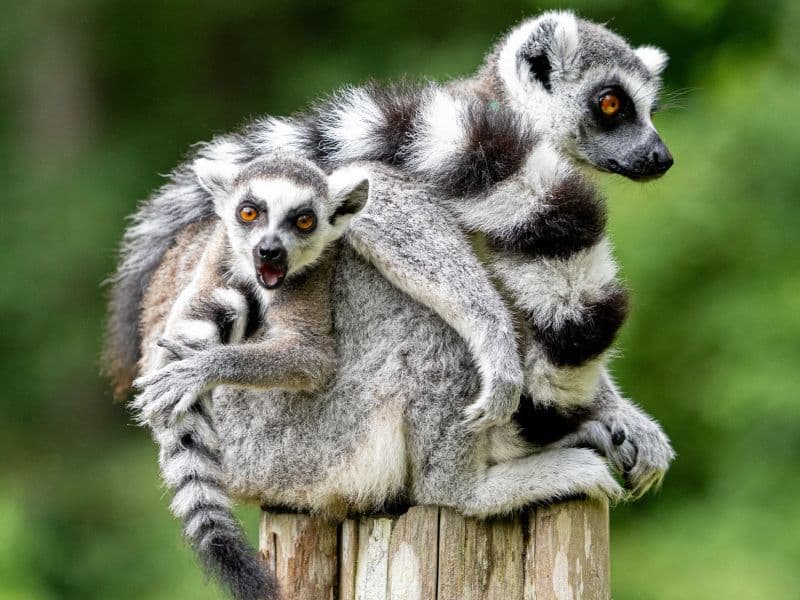
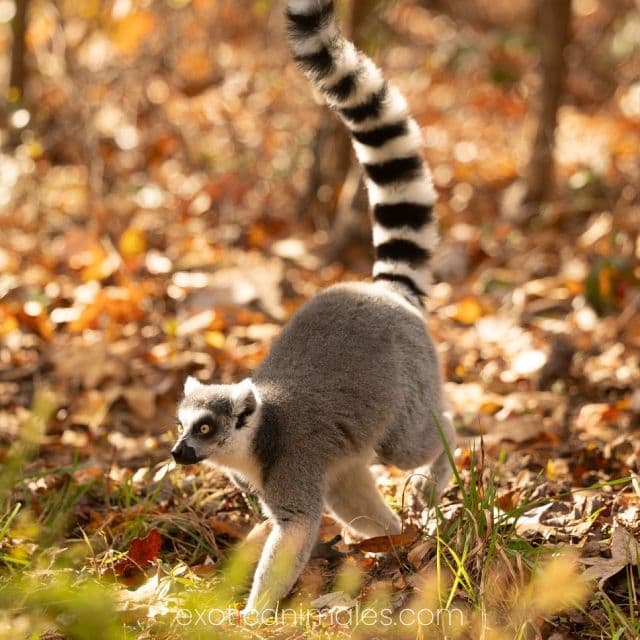
The ring-tailed lemur (Lemur catta) is the most iconic, easily identified by its 13 alternating black and white bands on a long, non-prehensile tail used for balance and visual communication. Uniquely, they are the most terrestrial lemurs, spending up to 50% of their time on the ground in matriarchal troops where females hold absolute dominance. In contrast, brown lemurs (genus Eulemur) are primarily arboreal specialists that navigate the upper forest canopy. Unlike their ring-tailed cousins, many brown lemur species exhibit cathemeral activity, meaning they are active during both the day and night.

Life with a Social Primate

Lemurs are not monkeys, but they are primates, and that means they have a highly complex social hierarchy. In a lemur’s world, females are the bosses, understanding this matriarchal structure is key to a successful bond. They are intensely social creatures that communicate through a fascinating array of chirps, purrs, and scent-marking. Because they rely so heavily on social grooming and interaction, we strongly encourage housing lemurs in pairs or small groups. Living with a lemur is a 20-to-30-year journey that requires a commitment to specialized diets, and an owner who respects their wild, ancient spirit.

The Crown Jewels of Madagascar: Ring-Tailed vs. Brown Lemurs

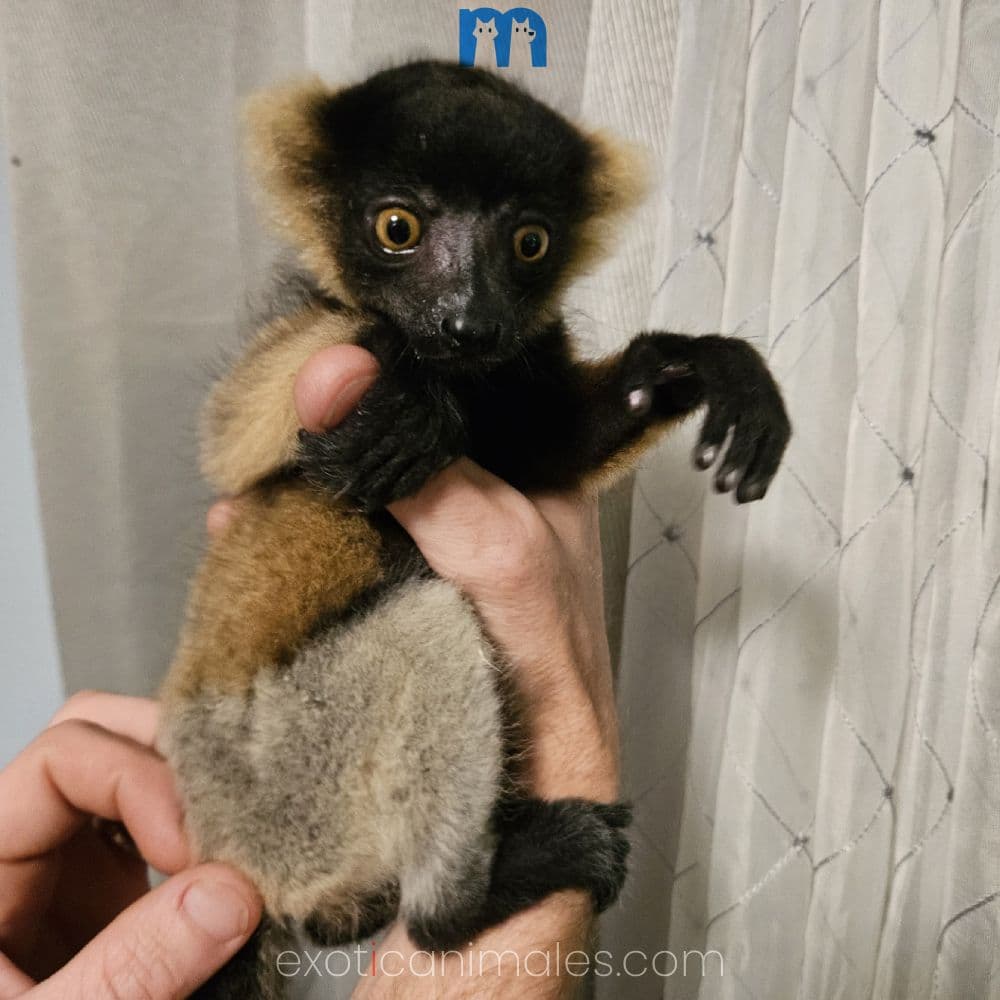
At E.A. Ranch, we work with two distinct and captivating species. Our Ring-Tailed Lemurs are the "yogis" of the ranch—famous for their sun-worshipping poses, high-intelligence, and striking black-and-white striped tails. Meanwhile, our Brown Lemurs offer a more understated beauty with their soft, caramel-colored coats and deep, expressive orange eyes. Our baby lemurs are mum raised with a focus on genetic diversity and robust health. When you bring a lemur home from us, you aren’t just getting a pet; you’re receiving a hand-reared animal that has been socialized with both humans and its own 'troop' to ensure a balanced temperament.

Lemurs may only be sold to residents within states where they are legal, and often require a USDA-licensed breeder to facilitate the transfer.
Ring-Tailed Lemurs

Interested in Adopting Ring-Tailed Lemurs from E.A Ranch?

Please read our pet care guide carefully before proceeding.

Adopting a Ring-tailed or Brown Lemur is a profound lifestyle shift, not just a pet acquisition. These are highly intelligent, social primates with a 20-25 year lifespan. Unlike 'lower' mammals, lemurs require constant mental engagement and a social hierarchy. We prioritize adopters who have a deep understanding of primate husbandry and the time to commit to an animal that views you as a member of its troop. Because they are social grooming animals, they require significant daily interaction to prevent the development of stereotypical behaviors or psychological distress.
The private ownership of lemurs is strictly regulated. Many states require a Captive Wildlife Permit, and federal law (under the Captive Wildlife Safety Act) may restrict the transport of primates across state lines for commercial purposes. Furthermore, your local zoning must allow for exotic primates. We require all adopters to verify their local ordinances and provide a copy of their state permit where applicable. Note: We strictly adhere to [USDA APHIS](https://www.aphis.usda.gov) standards to ensure all our lemurs go to homes capable of meeting federal welfare guidelines.
Lemurs are biologically predisposed to Hemochromatosis (Iron Storage Disease). Their bodies are hyper-efficient at absorbing iron, which can lead to toxic buildup in the liver. A specialized "low-iron" primate diet is mandatory. Their meals should consist of Mazuri Primate Biscuits supplemented with low-iron vegetables like sweet potatoes and leafy greens. Avoid citrus fruits, as Vitamin C increases iron absorption. Providing a carefully balanced diet is the single most important factor in ensuring your lemur's long-term health and preventing premature organ failure.
Lemurs are arboreal and require significant vertical space to thrive. A standard cage is insufficient; they need a dedicated primate troop room or a large outdoor aviary (minimum 10'x10'x15') equipped with swinging ropes, climbing branches, and elevated sleeping platforms. For Ring-tailed lemurs, floor space is also important as they are the most terrestrial of the lemur species. All enclosures must have double-entry safety locks to prevent escapes, as lemurs are incredibly dexterous and can easily manipulate simple latches.
In the wild, lemurs live in female-dominant troops. A solitary lemur is often an unhappy one. We strongly recommend adopting lemurs in pairs or small groups to allow for natural behaviors like allogrooming (social grooming) and huddling. If you must house a lemur alone, you must become their surrogate troop, which involves several hours of direct physical interaction daily. Be aware that during "breeding season" or '"stink fighting" periods (for males), even the most bonded lemur can exhibit hormonal aggression.
Prospective owners must be comfortable with scent marking. Ring-tailed lemurs, in particular, use brachial and spur glands to mark their territory. This is a natural, healthy behavior but it results in a distinct, pungent odor on cage furniture and walls. While they can be trained to use certain areas for waste, they generally do not "housebreak" in the traditional sense. You will need to use primate-safe, non-toxic enzymatic cleaners daily to maintain a sanitary environment without stripping away their "scent security" entirely.
Unlike many exotic pets, lemurs are diurnal (active during the day). Ring-tailed lemurs are famous for their "sun-worshipping posture", where they sit upright to expose their bellies to the sun. Access to natural sunlight or high-quality full-spectrum UVB lighting is essential for Vitamin D3 synthesis and bone health. A lack of proper lighting can lead to metabolic issues and depression. Their daytime activity makes them wonderful display animals, but they require a strictly enforced "lights out period" to mimic their natural circadian rhythms.
Standard veterinarians cannot treat primates. You must secure a relationship with an avian and exotic specialist who has specific experience with Malagasy primates. Annual exams must include fecal checks for parasites and bloodwork to monitor iron levels. Because primates can share many diseases with humans (zoonotic transfer), maintaining a rigorous vaccination and deworming schedule is vital for both the animal's safety and your own. We recommend checking the [Association of Exotic Mammal Veterinarians (AEMV)](https://aemv.org) to find a qualified provider near you.
A lemur's intelligence is its most defining trait. To prevent boredom-induced self-harm, you must provide cognitive enrichment. This includes foraging boards where they must use their fingers to extract treats, puzzle feeders, and a constantly rotating selection of primate-safe toys. Mirrors, varied textures, and even 'primate-friendly' television or music can provide auditory and visual stimulation. If a lemur isn't challenged mentally, they will often find their own 'entertainment' by dismantling their enclosure or household items.
The cost of a lemur extends far beyond the initial adoption. Between high-quality primate diets, custom-built enclosures, and specialized veterinary care, owners should expect to spend between $1,500 and $3,000 annually. Additionally, you must consider the "vacation factor" — it is extremely difficult to find qualified 'pet sitters' for primates. Adopting a lemur means committing to a lifestyle where your schedule revolves around their social and nutritional needs for the next two decades.